
Born Poor
A sober look at a very real problem

No meme better encapsulates many of us in the online policy wonk space than Numbers Fuckstein, a Democratic presidential candidate from Maryland with a passion for tax credits.

In this space, we often talk about economic efficiency, marginal gains and losses, and a whole bunch of interspersed technical mumbo jumbo. This argument appeals to a kind of person. The kind of person persuaded by a more mechanical approach. However, this approach fails to reach other kinds of people who might need a more personal touch.
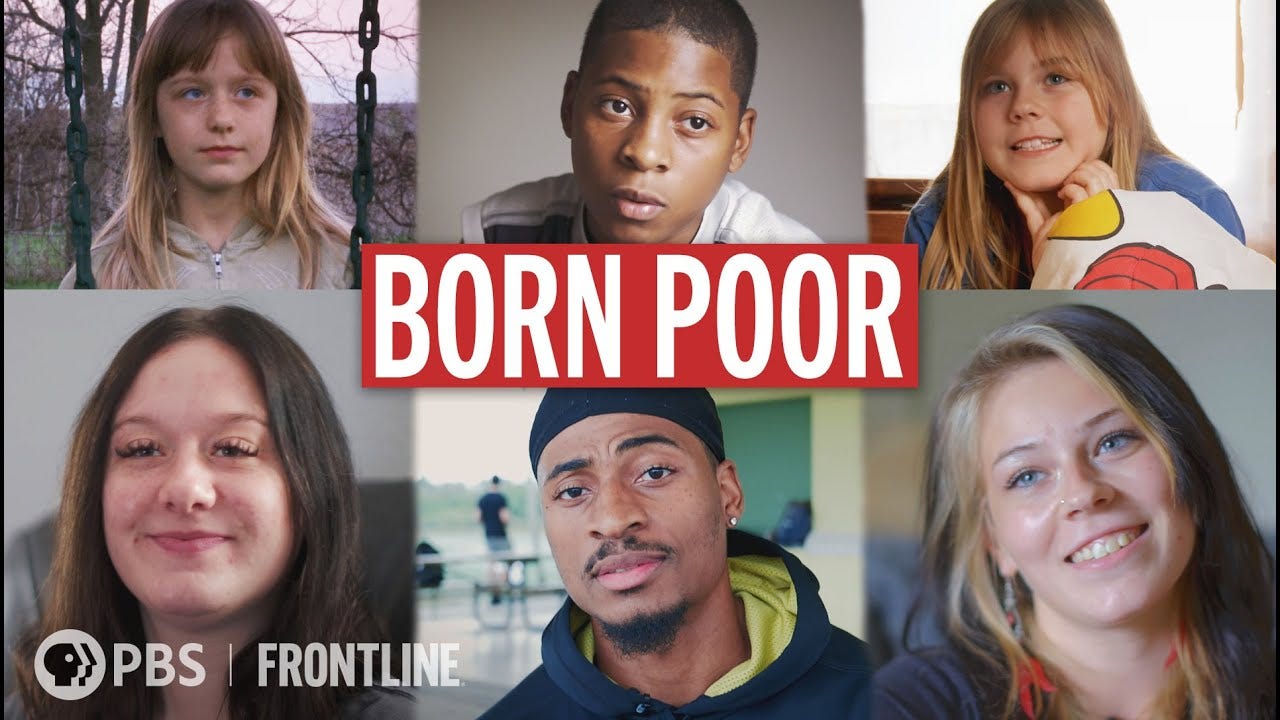
In the world of welfare policy, ‘Born Poor’ offers the personal complement to Numbers Fuckstein’s mechanical approach. This PBS documentary, released in October of 2025, used a simple method to capture what it’s like to be poor—find poor families, follow them around, and ask them questions every now and then.
That’s not all! PBS went sicko mode and followed a handful of children from their childhoods all the way up to adulthood, and PBS was sure to pick children who were very poor. I wanted to talk about it, so I will! Minor spoilers for the documentary ahead, so watch the documentary free on YouTube if it sounds interesting.
The Wild Ride of Poverty
Let’s look at the most recent data on household expenditure. Keep in mind, this is only ‘expenditure’, so it doesn’t reflect total standard of living, but it gives a rough idea of the private living standards of each decile.
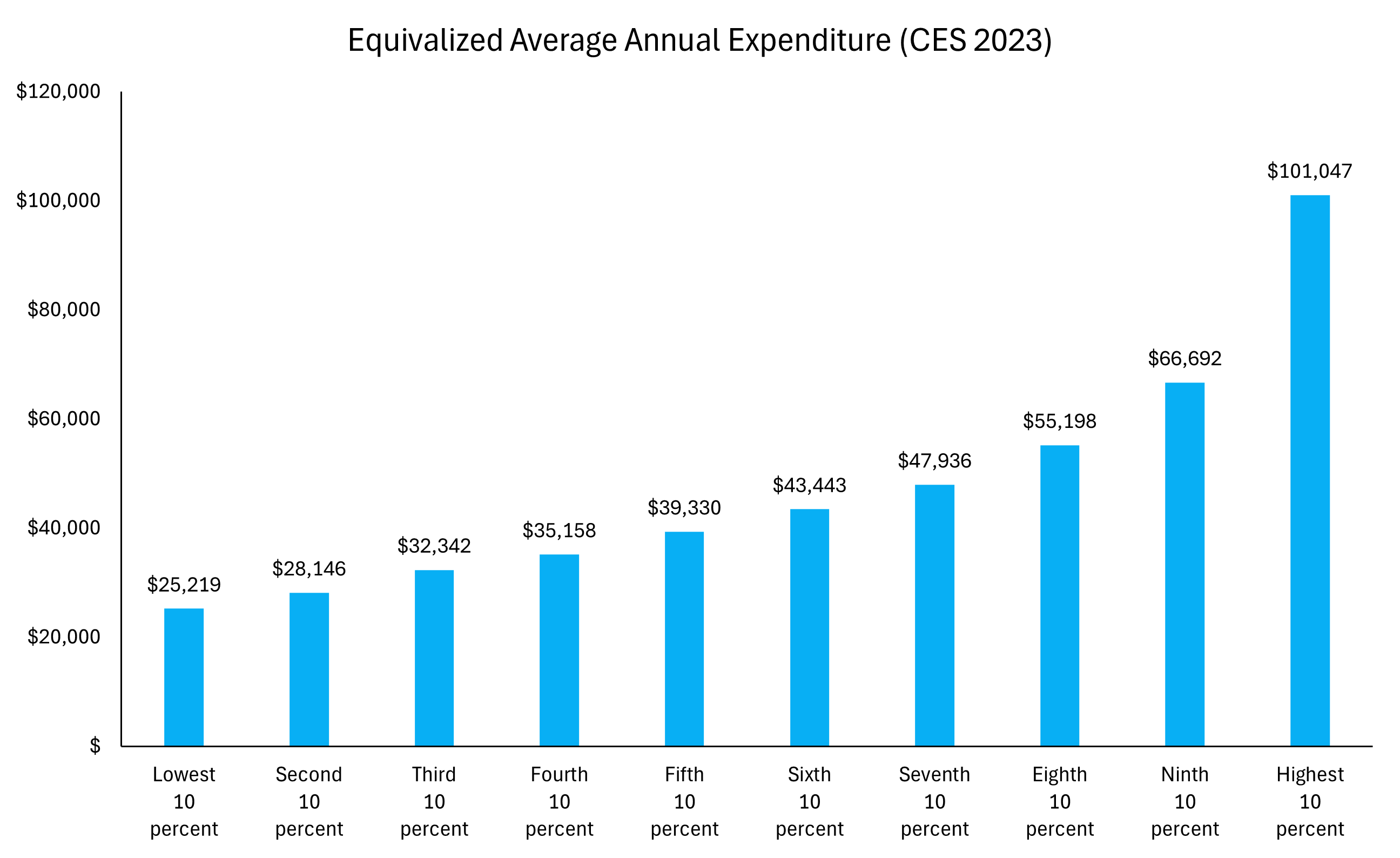
$25,000 in 2023 was not a lot of money to support a person, and if you didn’t know what the bottom 10% goes through, this documentary will elucidate that for you. These people struggle with the job market, educational opportunities, public benefits, and access to basic needs.
Something interesting right off the bat is how the series highlights the volatility of poverty. People often think of the impoverished as people who have been in poverty for generation after generation and for long periods of their lives, if not their entire lives, but this is quite rare. People fluctuate a lot between income brackets both within their lifetimes and across generations, and you see a lot of that throughout this documentary.
The documentary also destroys any hope that the children are blissfully ignorant of their surroundings. These children know they’re poor. They share in the stress over household bills, and they see the many different ways their families struggle due to their class position.
These families need to go to food banks and wait in line to have enough food to eat. They need to sign up for special lunch programs that only ‘some kids’ qualify for. The some kids in this case being the poor kids, who get out of class once a week to pick up a box of food. Of course, when children go through things like these, they, from a very early age, begin to understand the inequalities of the world around them.
The families also often have to move from place to place to save on living expenses. The constant moving is quite stressful for the families, especially the children. As a child, it’s nice to have a familiar setting, but these kids don’t get that.
On that note, this documentary is really, really sad in moments. There will be young children describing what it’s like to be hungry and how sad and angry that makes them. There’s an ever sadder moment in the documentary if you ask me, but I won’t spoil it for you. Growing up poor is a sad experience, and it’s especially sad for children, since no one could reasonably blame a child for being poor.
I wasn’t as interested in the story as the children grew up. As the kids grew into teens, into young adults, and into slightly older young adults, the documentary gives each of the families a chance to share an update. Each update has at least a few years in between, so each interval includes pretty big life updates from each family.
Although I say these intervals include pretty big life updates, that diminishes as the runtime marches forward. I think this comes from the stages in a person’s life being less transformative by the year. A 19 year old vs. a 12 year old is night and day for most people.
At 12, I was very much still a child, but at 19, I was very much a young adult. If you compared me at 19 to me at 22, sure I was different in some important ways, but I was mostly the same, still going to the same college, with around the same income, and around the same goals/aspirations. This is in part how I feel about the latter half of the documentary, though I still enjoyed it.
Something worth pointing out to anyone after watching this documentary is that although the people in the documentary are very poor by most standards, there are many millions of people in the country who are even poorer. The people in this documentary do not seem to struggle with deep homelessness, and they have some access to other basic needs like water, food, clothing, education, etc.
I point this out not to trivialize the experiences of the people in the documentary, but rather to emphasize the magnitude and depth of the poverty problem in America. These families struggle in the same ways that tens of millions of other families do, but from the perspective of millions of Americans even further down the income scale, these families are doing alright. That should shock the conscience, but for some reason, it just doesn’t. At least, not in a deep enough way that we’re prepared to do much about it.
Those are the main bits, so I’ll leave it there. I enjoyed this documentary, and I hope you check it out. This is a great piece of media to share with people skeptical of the welfare state or interested in a look at real America for the poor.
I'm not sure how much this documentary pertains to people "skeptical about the welfare state", since those people, typically libertarians, still want to help the poorest individuals, but through different means like private charity and fully in cash welfare benefits like a negative income tax. So I do think the welfare state skepticism is well-founded.
Also, do you have any thoughts on the swap line with Argentina?
What amazed me….and made me had to stop watching, was that a few of them had multiple kids at such a young age. Like seeing a toddler eat saltines and chili broke me.